
In a world of fluctuating markets, tangible assets remain a reliable safe haven. Gold has long symbolised prestige, wealth and stability—universally recognised and historically resilient. Exquisite gemstones share that same enduring significance, yet offer a compelling opportunity for those seeking both rarity and growth.
Unlike gold, which is largely assessed by weight and market price, gemstones are defined by a more nuanced interplay of scarcity, quality and origin. Each exceptional stone reveals its worth through distinct characteristics, becoming both a collectible treasure and a tangible investment. In today’s mass-produced luxury market, intrinsic value is often overlooked. Beyond serious collectors, many people don’t see jewellery as a valuable commodity—I do!

A Designer’s Perspective
As a designer, I am deeply engaged in selecting gemstones. Working with small independent suppliers, with whom relationships are invaluable, I hand-select the finest ethically-sourced diamonds, gemstones and pearls; thus, ensuring quality and authenticity. The process is intuitive, yet informed, guided by an eye for rarity, colour and natural integrity.
These stones are incorporated into my signature FRIDA collections and bespoke pieces, from bold statement fine art jewellery to engagement rings, fine jewels and men’s designs. Anything imagined can be brought to life on a bespoke basis, creating a piece exclusively for its wearer. Handmade in Canada, FRIDA creations have been featured in leading publications, including British Vogue.
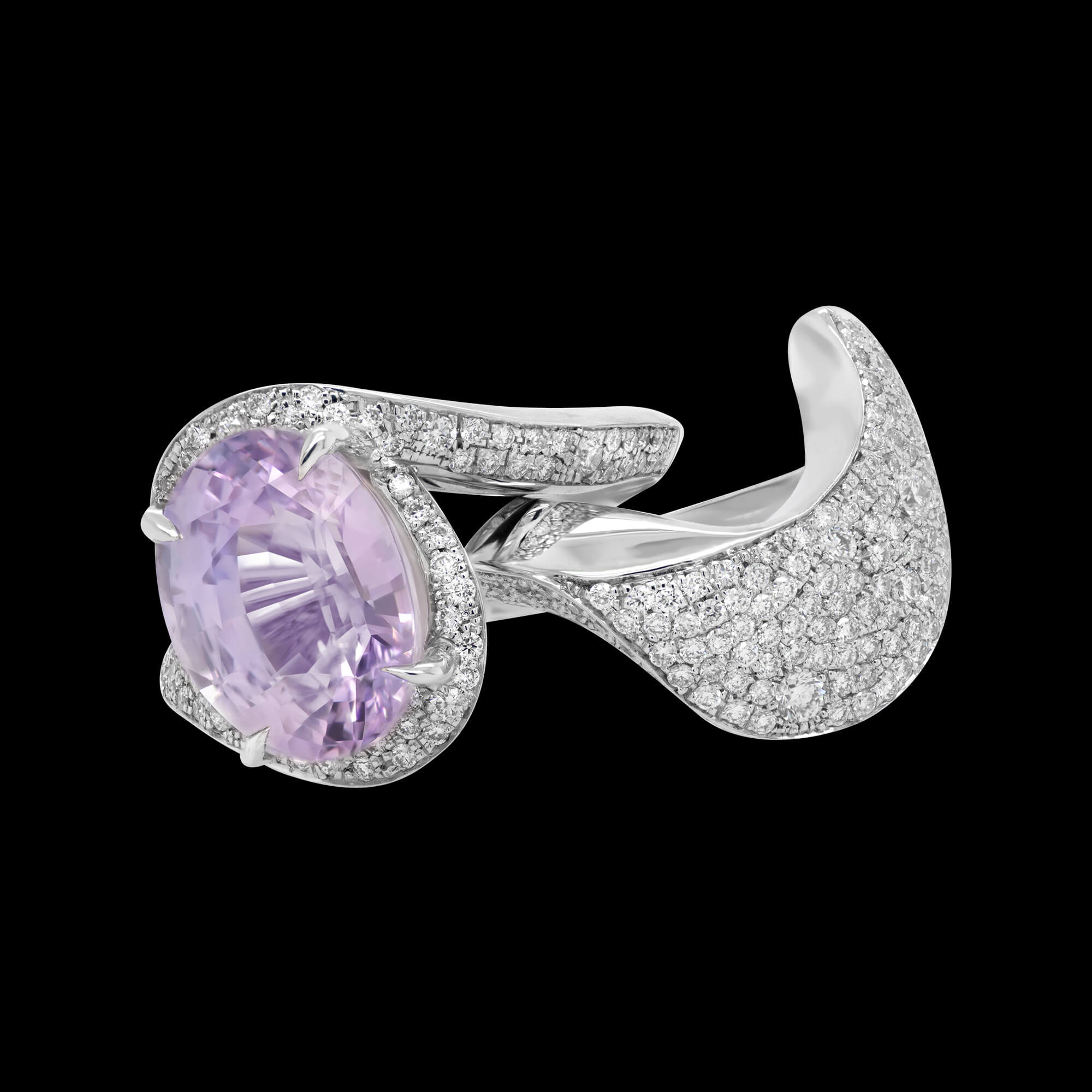


The “Big Three” Investment Gemstones
At the pinnacle of coloured gemstones, three stand apart for their rarity, provenance and investment significance—known collectively as the “Big Three,” due to their established recognition in the industry.
Ruby
Prized for vivid red hues; the most coveted are pigeon’s blood red, historically from Mogok, Myanmar, where supply is increasingly limited.
Sapphire
Typically thought of as blue, with the most sought-after stones originating from Kashmir, Sri Lanka (Ceylon) and Myanmar (Burma). Sapphires, however, naturally occur in every colour, from soft pinks and yellows to vibrant oranges and greens, offering opportunities both within and beyond traditional investment stones. Less than 1% of sapphires on the market are unheated—making untreated stones significantly more rare and highly desirable among collectors.
Emerald
Celebrated for its captivating green hue, with the finest gems originating from renowned sources in Colombia and Zambia. Long revered by royalty, collectors and connoisseurs, emeralds have earned their place among the “Big Three” through a combination of rarity, historic significance and global demand.
These gems are valued not only for their elegance, but for their rarity. When a mine slows production or closes, the remaining stones become increasingly scarce, enhancing both desirability and enduring value.

Beyond The “Big Three”: Gems With Potential
Beyond the classics lie compelling gemstones, such as spinels, tsavorites and tourmalines. I am drawn to these lesser-known stones, where individuality, unique colour and rarity reveal themselves in unexpected ways. Still under-recognised by the broader market, this is precisely what makes them so compelling. The list is endless, the supply finite!
Most commercially available stones, the great majority of which undergo heat treatment to improve their colour and clarity, don’t make the ‘cut’. Instead, I specialise in exceptional unheated gems—naturally magnificent and exceedingly rare. There’s something magical about the authenticity and natural beauty of unheated stones in their unaltered, pure state. More practically, these qualities also add significantly to their value, which will increase over time, making them an excellent investment.
Alongside coloured gemstones, Golden South Sea pearls are increasingly sought after for their natural golden hue, size and luminous nacre. Cultivated over several years in Pinctada maxima oysters, these pearls develop beautiful thick nacre, giving them durability and depth of colour. Their slow growth and limited supply make them a rare and collectible complement to fine gemstones.
Diamonds: Size, Rarity & Fancy Colours
White diamonds under 4 carats are relatively abundant and, thus, not considered rare. However, fancy diamonds with natural colour are highly collectible — prized for both their scarcity and distinctive allure.
Natural pink diamonds, for example, are exceptionally rare, representing less than 0.1% of all diamonds mined. Over 90% of these remarkable stones originated from the Argyle Diamond Mine, which ceased operations in 2020. With its closure, the supply of natural pink diamonds has become finite, thus intensifying their desirability and reinforcing their long-term value.

Understanding Origin and Mine Scarcity
Origin plays a significant role in a gemstone’s value, reflecting not only geography, but geological conditions and history. Mines influence colour, clarity and overall character. When a mine slows or closes, supply becomes increasingly rare and therefore more valuable. For example, emeralds from Colombia’s Muzo mines are celebrated for their deep, vivid green and fine-quality clarity and historic mines like Somondoco are no longer active, making stones from these sources increasingly rare.
This principle applies to both traditional investment stones and lesser-known gems, such as spinels or Paraíba tourmalines. Recognising provenance alongside natural qualities allows collectors to identify pieces that combine beauty with lasting value.

Gemstones as a Long-Term Investment
Investing in gemstones is a long-term strategy, often viewed over 10–15 years or more. Unlike stocks or other liquid assets, the market for rare gems evolves gradually. Scarcity increases over time as mines close, supply dwindles and demand rises from collectors worldwide. Historical trends show that high-quality, untreated gems, particularly the “Big Three” and rare coloured stones, consistently appreciate in value as the global demand for extraordinary gems grows.
Recent market trends highlight several categories with strong performance:
- Unheated and premium sapphires: Kashmir, Burmese and Ceylon stones with vivid colour continue to appreciate.
- Burmese “pigeon’s blood” rubies: Exquisite rubies maintain rising premiums, particularly untreated and larger stones.
- Colombian emeralds: High transparency, top-quality stones remain in high demand.
- Paraíba tourmalines: Known for strong long-term appreciation, with high-qualtiy neon-blue and green copper-bearing stones commanding outstanding prices driven by extreme rarity and sustained global demand.
- Spinels: Vivid pink, red and cobalt blue stones are increasingly sought after as collector awareness grows.
By approaching gemstone investment with discernment and patience, collectors can acquire pieces that combine rarity, beauty and value.
Assessing Gemstone Quality
When considering gemstones, quality is everything. A stone’s value is determined by a combination of colour, clarity, cut and carat weight, often referred to as the “4Cs,” though for coloured gemstones, colour is the dominant factor.
- Cut: The most critical element, with vivid, evenly distributed hues commanding the highest value.
- Clarity: Stones with minimal visible inclusions are rare and highly valued, though some gems, like emeralds, are naturally included.
- Cut: Precision enhances brilliance, colour and overall visual appeal.
- Carat: Size matters, but quality always takes precedence; a smaller, high-quality gem often surpasses a larger, flawed one.
Certification & Trust
Certification is essential. Independent laboratories such as the Gemological Institute of America (GIA) verify colour, clarity, carat weight, cut, treatment status and, where possible, origin—ensuring transparency beyond appearance.
Trust in your jeweller is equally important; their expertise ensures each stone is accurately represented.
Selecting Gems As Investments
When acquiring gemstones for investment, I focus on the ‘life’ within the stone, in addition to the following qualities that underpin value:
- Exceptional colour, tone and clarity;
- Rarity in the market;
- Provenance and mine source;
- Treatment status — untreated stones are highly desirable.
A gemstone is a tangible asset, allowing it to be worn as jewellery while retaining investment value. Thoughtful settings and bespoke designs ensure the stone’s qualities are fully appreciated, both as a wearable piece of jewellery and as an collectible piece.

Ceylon Blue Sapphire
Colour: Unheated, vivid, medium dark, blue colour
Clarity: Eye-clean clarity on the Type 11 gemstone scale
Cut: Cushion-cut
Origin: Ceylon/Sri Lanka

Ceylon Pink Sapphire
Colour: Unheated, strong, light strongly pinkish-purple colour
Clarity: Eye-clean clarity on the Type 11 gemstone scale,
Cut: Round brilliant-cut
Origin: Ceylon/Sri Lanka

Natural Pink Diamond
Colour: Fancy Purple Pink
Clarity: VS2
Cut: Rectangular Cushion

Burmese Peridot
Colour: Unheated, vibrant, medium dark moderately yellowish green color
Clarity: Eye-clean clarity on the Type 1 gemstone scale
Cut: Rectangular step-cut
Origin: Burma

Bi-Coloured Tourmaline
Colour: Pavillion pink bi color – light slightly orangey pink to yellowish green colour
Clarity: Eye-clean clarity
Cut: Round-facted

Tsavorite
Size: 1.69ct
Colour: Strong, medium green colour
Clarity: Eye-clean clarity (Lower Extra Fine Quality)
Cut: Emerald-cut
FRIDA Philosophy
After many years of collecting and designing, I channel this philosophy into FRIDA Fine Jewellery, where rare gemstones, expert craftsmanship and custom design converge. As a custom designer, my signature FRIDA fine jewellery and engagement collections are filled with a kaleidoscope of natural sapphires and rare gemstones. Each piece becomes wearable art—a timeless investment to be enjoyed, cherished and passed on.
Pieces are handmade in Canada using the finest quality of gemstones and diamonds. Every piece is an expression and without question harbours a soul, a voice, a story.
For me, jewellery is more than adornment—it is an expression of individuality. Most FRIDA creations are gold centric, providing a foundation of strength and lasting value, while ethically-sourced gemstones add character and story.


The FRIDA Experience
Investing in rare gemstones is deeply personal and each client’s criteria is unique. I work closely with my clients to navigate the world of exquisite gemstones, providing advice tailored to their individual aesthetic, lifestyle and investment level, whether it’s starting a first collection or expanding a curated portfolio.

My guidance considers market trends, long-term value, provenance, ensuring each piece aligns with both timeless design and investment potential.
Through custom and bespoke design services, I transform one-of-a-kind gems into jewellery that celebrates the individuality of my clients. Pieces are thoughtfully crafted, blending artistry, functionality and enduring value.
I welcome you to visit the FRIDA boutique on the Halifax Waterfront or to connect by email fridajewellery@frida.ca for a personal virtual consultation.
To learn more about our custom/bespoke process, we invite you to visit our website, frida.ca/services/bespoke


0 Comments